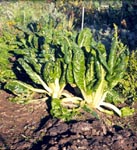
In many plants, flowering can be accelerated or induced by exposure to a long period of near-freezing temperatures. This is a commonly employed reproductive strategy that allows for flowering and seed production in the environmentally favorably period following natural winter. This phenomenon, termed vernalization, has been studied for decades at the physiological level but only recently at the molecular level.

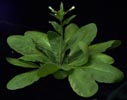
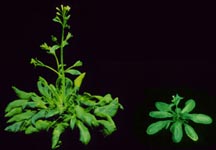
The lack of molecular work addressing vernalization is partly due to the fact that in Arabidopsis thaliana, the commonly utilized laboratory strains flower soon after germination, and extended cold treatments do little to further abbreviate the vegetative phase (Koornneef et al., 1998). However, most natural ecotypes of Arabidopsis behave as winter annuals, flowering extremely late in the absence of cold, but very early when exposed to cold for extended periods.

The flowering habit among natural ecotypes is largely determined by allelic variation at two loci, designated FRI and FLC (Lee et al., 1993; Koornneef et al., 1998). 'Early' alleles at either loci behave similarly to presumed null alleles created by induced mutation, suggesting that natural early alleles have lost function (Michaels and Amasino, 1999). FRI has recently been cloned (Johanson et al., 2000).

FLC encodes a MADS-box-containing protein (Michaels et al., 1999; Sheldon et al., 1999), suggesting that it functions in transcriptional regulation, but to date no direct targets have been identified. The activity of FLC is semidominant, and transgenic plants containing extra copies of the FLC genomic sequence never flower without vernalization, acting in essence as biennials (Michaels and Amasino, 1999; Sheldon et al., 1999). Importantly, these findings suggest that the difference in flowering habit between winter-annual plants and biennial plants could be qualitative, rather than quantitative.

In Arabidopsis, a genotype conferring the winter-annual habit can also be synthesized by impairing the function of genes that function in the autonomous pathway (Koornneef et al., 1991), and the block to flowering resulting from the loss of autonomous-pathway gene function is also dependent on FLC activity (Lee et al., 1994; Koornneef et al., 1994; Sanda and Amasino, 1996a,b). These data suggest that the flowering-inhibitor activity of FLC is both positively regulated by FRI and negatively regulated by autonomous pathway genes.

Consistent with this idea, FLC mRNA expression is increased both in genotypes containing late FRI alleles, and in autonomous-pathway gene mutants (Michaels and Amasino, 1999; Sheldon et al., 1999). FLC mRNA expression is decreased after extended cold exposures (Michaels and Amasino, 1999), suggesting that vernalization involves molecular events 'upstream' from FLC. That the activity of neither FRI nor the autonomous pathway genes is required for vernalization indicates that although these genes set up a requirement for vernalization, they are not directly involved in the associated cold signal transduction.

Once FLC is downregulated in vernalized plants, its repression is maintained through an epigenetic mechanism involving the VRN2 gene (Gendall et al., 2001). The cold-associated downregulation of FLC is not greatly affected by loss of VRN2 function, indicating that this gene probably is not important for initial suppression of FLC. VRN2 encodes a protein with sequence similarity to a member of the Polycomb-group protein class, which has been best characterized in Drosophila. These proteins are components of large complexes that reinforce the transcriptionally suppressed state of homeotic genes, potentially by packaging and/or maintaining chromatin in states less accessible to transcriptional machinery. Similarly, it is likely that VRN2 functions in some way to reduce accessibility of the FLC gene, as FLC chromatin in vrn2 mutants exhibits increased DNase sensitivity relative to that of wild-type plants, following cold treatment (Gendall et al., 2001). That chromatin structure is intimately involved in flowering and vernalization was previously shown by the strong effect on flowering conferred by disruption of processes tied to chromatin dynamics, including DNA methylation and histone deacetylation, especially in genotypes with a winter-annual flowering habit (Burn et al., 1993; Finnegan, 1998). Transgenic plants in which endogenous DNA methylation was disrupted exhibited decreased FLC expression in the absence of a vernalizing cold treatment (Sheldon et al., 1999), indicating that appropriate chromatin structure is crucial for the maintenance of FLC expression in nonvernalized plants, as well as its suppression in vernalized plants.

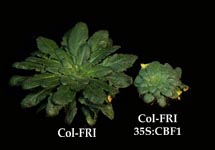
Components of the cold signalling pathway involved in FLC repression have not yet been identified. Interestingly, overexpression of members of the CBF family of transcriptional activators, which act as a 'master switch' to turn on the cold acclimation response, in a winter-annual genotype has no effect on flowering time (J Liu et al., 2002). We also analyzed the potential involvement of the phytohormone ABA, which is essential for cold-induction of some genes, and may have a role in acclimation. We found that mutations that compromise ABA biosynthesis, or ABA sensitivity, have little effect on flowering time when introduced into a winter-annual genotype. These findings suggest that if vernalization and acclimation share common components, they operate 'upstream' of these factors.

Some key papers addressing the molecular aspects of vernalization

Burn, J.E., Bagnall, D.J., Metzger, J.D., Dennis, E.S. and Peacock, W.J. 1993. DNA methylation, vernalization, and the initiation of flowering. Proc. Natl. Acad. Sci. USA 90, 287-291.

Chandler, J., Wilson, A. and C. Dean. 1996. Arabidopsis mutants showing an altered response to vernalization. Plant J. 10, 637-644.

Finnegan, E.J. 1998. DNA methylation and the promotion of flowering by vernalization. Proc. Natl. Acad. Sci. USA 95, 5824-5829.

Gendall, A.R., Levy, Y.Y., Wilson, A. and Dean, C. 2001. The VERNALIZATION 2 gene mediates the epigenetic regulation of vernalization in Arabidopsis. Cell 107, 525-535.

Johanson U, West J, Lister C, Michaels S, Amasino R, Dean C. 2000. Molecular analysis of FRIGIDA, a major determinant of natural variation in Arabidopsis flowering time. Science 290, 344-7.

Koornneef, M., Blankenstijn-de Vries, H., Hanhart, C., Soppe, W. and T. Peters. 1994. The phenotype of some late-flowering mutants is enhanced by a locus on chromosome 5 that is not effective in the Landsberg erecta wild type. Plant J. 6, 911-919.

Koornneef, M., Alonso-Blanco, C., Peeters, A.J.M and W. Soppe. 1998. Genetic control of flowering time in Arabidopsis. Annu. Rev. Plant Physiol. Plant Mol. Biol. 49, 345-370.

Lee, I., Bleecker, A. and R.M. Amasino. 1993. Analysis of naturally occurring late flowering in Arabidopsis thaliana. Mol. Gen. Genet. 237, 171-176.

Lee, I., Michaels, S.D., Masshardt, A.S. and R.M. Amasino. 1994b. The late-flowering phenotype of FRIGIDA and mutations in LUMINIDEPENDENS is suppressed in the Landsberg erecta strain of Arabidopsis. Plant J. 6, 903-909.

Liu, J., Gilmour, S.J., Thomashow, M.F., and van Nocker, S. 2002. Cold signalling associated with vernalization in Arabidopsis thaliana does not involve CBF1 or abscisic acid. Physiol. Plant. 114, 125-134.

Michaels, S.D. and R.M. Amasino. 1999. FLOWERING LOCUS C encodes a novel MADS domain protein that acts as a repressor of flowering. Plant Cell 11, 949-956.

Sanda, S.L. and R.M. Amasino. 1996a. Ecotype-specific expression of a flowering mutant phenotype in Arabidopsis thaliana. Plant Physiol. 111, 641-644.

Sanda, S.L. and R.M. Amasino. 1996b. Interaction of FLC and late-flowering mutations in Arabidopsis thaliana. Mol. Gen Genet. 251, 69-74.

Sheldon, C.C., Burn, J.E., Perez, P.P., Metzger, J., Edwards, J.A., Peacock, W.J., and Dennis, E.S. 1999. The FLF MADS box gene: A repressor of flowering in Arabidopsis regulated by vernalization and methylation. Plant Cell 11, 445-458.

Sheldon, C.C., Rouse, D.T., Finnegan, E.J., Peacock, W.J. and E.S. Dennis. 2000. The molecular basis of vernalization: The central role of FLOWERING LOCUS C (FLC). Proc. Natl. Acad. Sci. USA 97, 3753-3758.